Field guide 02 · Readiness
Preparing for Changing Conditions
Good preparation connects a forecast to a route, a group and a decision. Carrying more equipment cannot compensate for ignoring a closing weather window.
Read the mountain, not just the town
A forecast for Bergen, Ålesund or a fjord-side village may say little about an exposed ridge above it. Check the forecast at relevant elevations and at several points along your route. Examine the timing of precipitation, wind direction and gusts, cloud cover, temperature and any warnings. Consider how each affects your specific terrain.
Rain on steep rock can alter traction before it becomes heavy enough to feel dramatic. Low cloud can remove the landmarks that made a route seem straightforward. Wind may be manageable on a sheltered approach and unacceptable on a ridge. A warm valley morning does not exclude cold conditions higher up, especially when you stop moving.
Use Yr for forecasts and Varsom for relevant natural-hazard warnings, including avalanche information when travelling in snow terrain. An absence of a published warning does not mean a route is safe. Forecasts describe uncertainty at a wider scale than the next slab, stream or slope.
If the forecast deteriorates during the return
Shorten the route before departure, choose lower and less exposed ground, or postpone. Do not plan to outrun a forecast change when a modest delay would remove your margin.
If cloud hides the next navigation point
Stop in a safe place and confirm your position. If you cannot navigate confidently with suitable mapping and skills, retreat while you still know the route. Do not follow another group blindly.
If snow remains on a summer route
Seek current local advice. Firm snow, hidden drops and avalanche terrain may require specialist skills and equipment. Small traction devices do not make every snow slope suitable for walking.
Pack for a delay, not just a finish
Use this as a starting checklist for a non-technical day hike in suitable conditions, not as a universal packing prescription. Remote, winter or technical trips need a different assessment. Ensure essential items are accessible without emptying the whole pack in rain.
Stay functional
- Waterproof jacket and trousers
- Insulating layers protected from water
- Hat, gloves and suitable footwear
- Food, drinking water and a sensible reserve
Manage an interruption
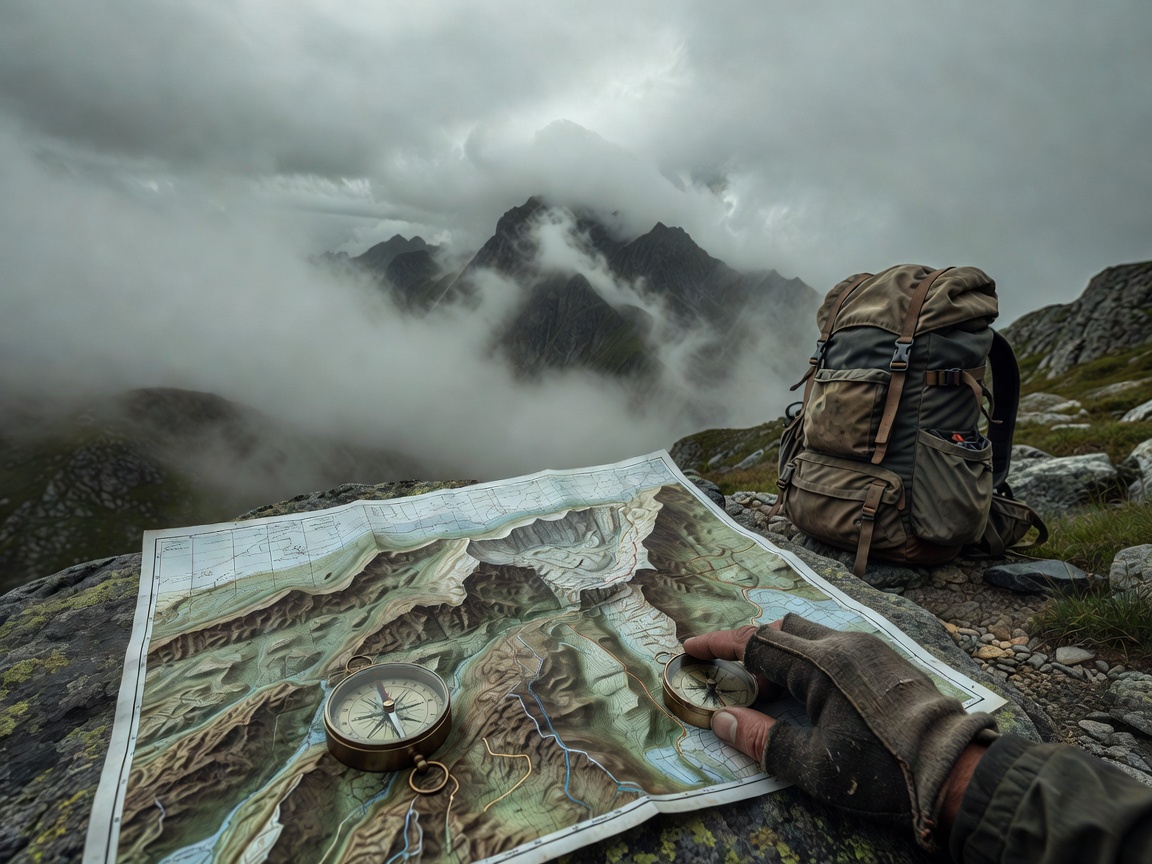
- Offline map, compass and the skills to use them
- Charged phone and protected power reserve
- Headlamp with dependable spare power
- First-aid supplies and emergency shelter appropriate to the route
Test the fit of footwear on uneven ground before a demanding day. Waterproof clothing should remain usable over your insulating layers. Trekking poles can help balance on appropriate terrain, but they do not replace careful foot placement and may need to be stowed where hands are required.
Keep navigation independent
Download maps before leaving reliable internet access, then check that the relevant detail is actually available offline. A saved screenshot is not always sufficient for navigation. Learn the route's shape, surrounding valleys and escape options rather than relying on a moving dot.
Cold, moisture and continuous screen use can reduce phone availability. Carry an appropriate independent backup and know how to use it. A satellite communication device can add an option on remote routes, but coverage, subscriptions and terrain limitations vary; it is not a guarantee of rescue.
Leave a clear plan behind
Give a trusted person your intended route, group details, expected return and a clear overdue procedure. Explain when they should seek help and what information they should provide. Update them if your route changes, but do not assume you will have mobile coverage at every decision point.
Before departure, ask each person about energy, recent experience, injuries and concerns. Discomfort is useful information, not a failure of enthusiasm. Agree that anyone can request a reassessment without needing to defend it. Recheck the forecast and local notices on the day, then make a fresh decision at the trailhead.
If someone becomes cold, confused, injured or unable to continue, stop pursuing the objective. Move away from immediate hazards when safe, protect them from wind and wet, and seek assistance early. In Norway, 112 is the emergency police number and 113 is for urgent medical assistance. Communicate your location, the incident, group size and conditions clearly; do not assume an online contact form is monitored.